Latest · October 9, 2026
Uyir Lab launches a public test of whether AI understands how people really speak
TORONTO, October 9, 2026. Uyir Lab, an independent AI lab based in Toronto, today launched "Does AI understand you?", a free voice test that shows in about 30 seconds how AI can misunderstand the way people actually speak. The lab is also building Uyir Bench, an independent report card on how well leading AI models understand languages and dialects that today's systems cover thinly.
AI assistants are becoming the front door to banks, hospitals, telecoms and government services. But most AI learned from the written internet, and most people don't speak the way the internet is written. Billions use regional dialects and slang, or switch languages mid-sentence. When AI misreads them, the result is a new digital divide: whether a machine understands you depends on how you speak.
"AI is becoming the way people reach services, and it shouldn't only work for people who talk like a textbook," said Shan Lingam, founder of Uyir Lab. "We want to measure that gap honestly, language by language, and close it with the people who actually speak those languages."
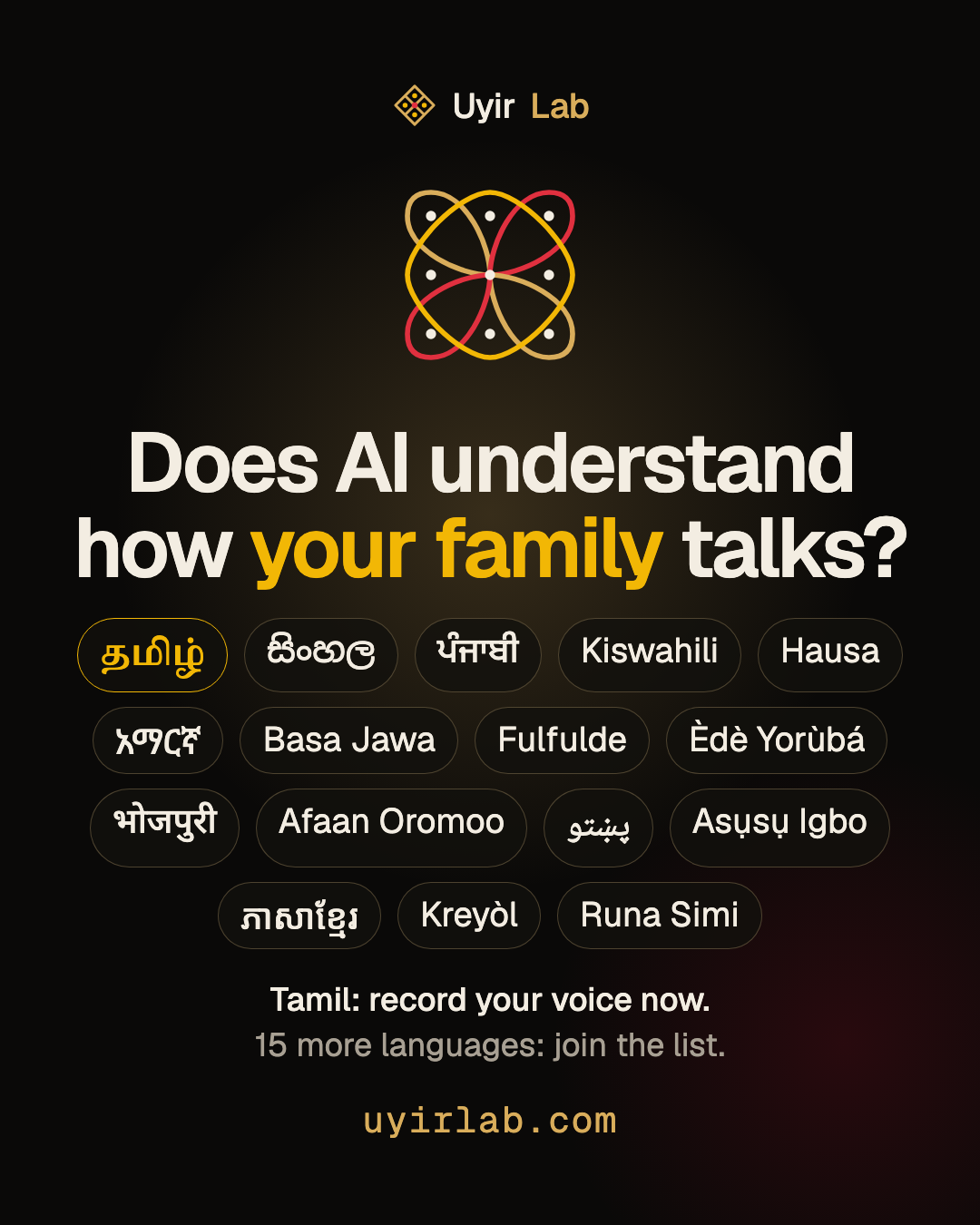
Uyir Bench compares AI models from OpenAI, Google, Anthropic and others on dialects, mixed-language speech, culture, translation and reasoning. Every test question is approved by two native speakers, and most of the test set stays private so it cannot leak into AI training data. Alongside the report card, Uyir Lab works with native speakers to record and review expert language data with consent, which AI companies can use to close the gaps it finds. The lab's roadmap covers 16 underserved languages with more than 897 million speakers, including Tamil, Sinhala, Punjabi, Swahili, Yoruba, Pashto and Haitian Creole.
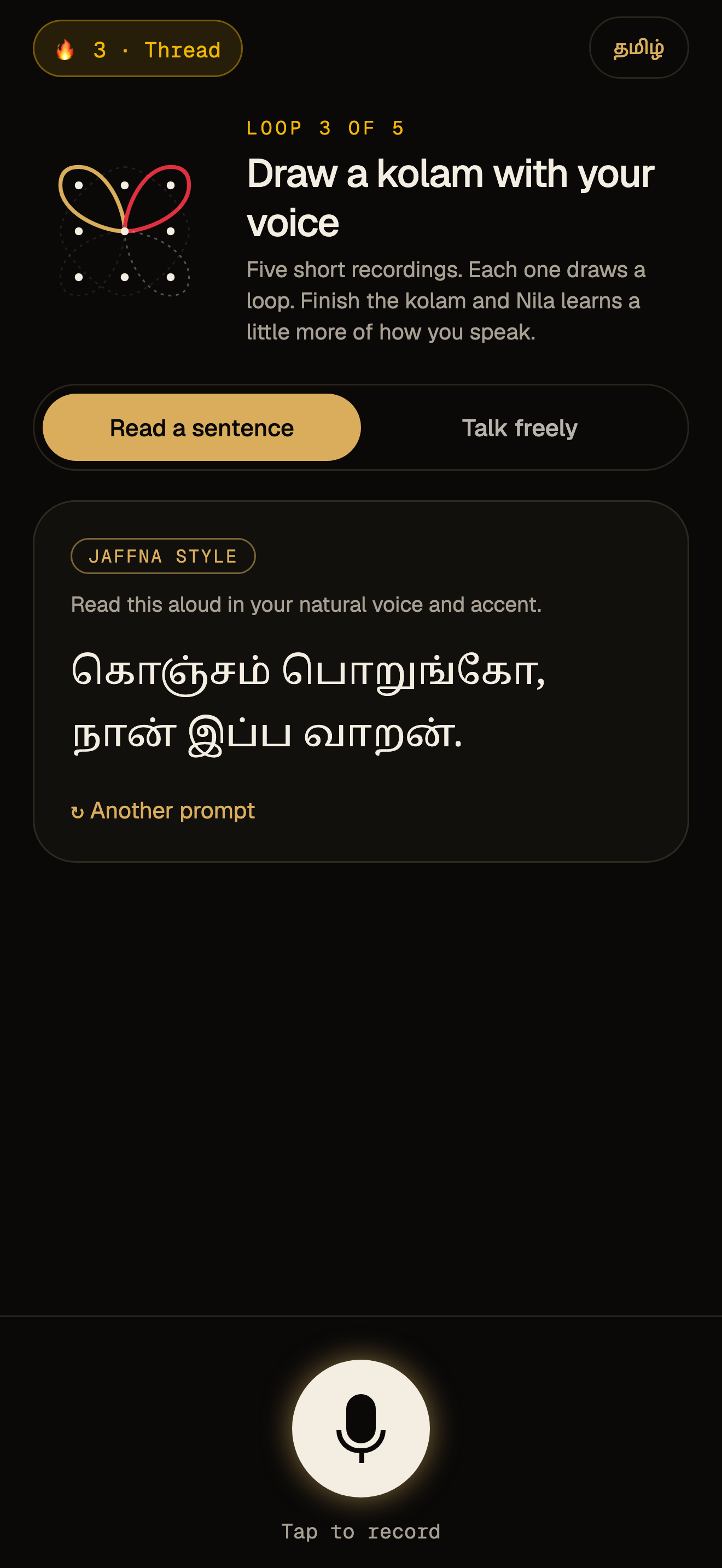
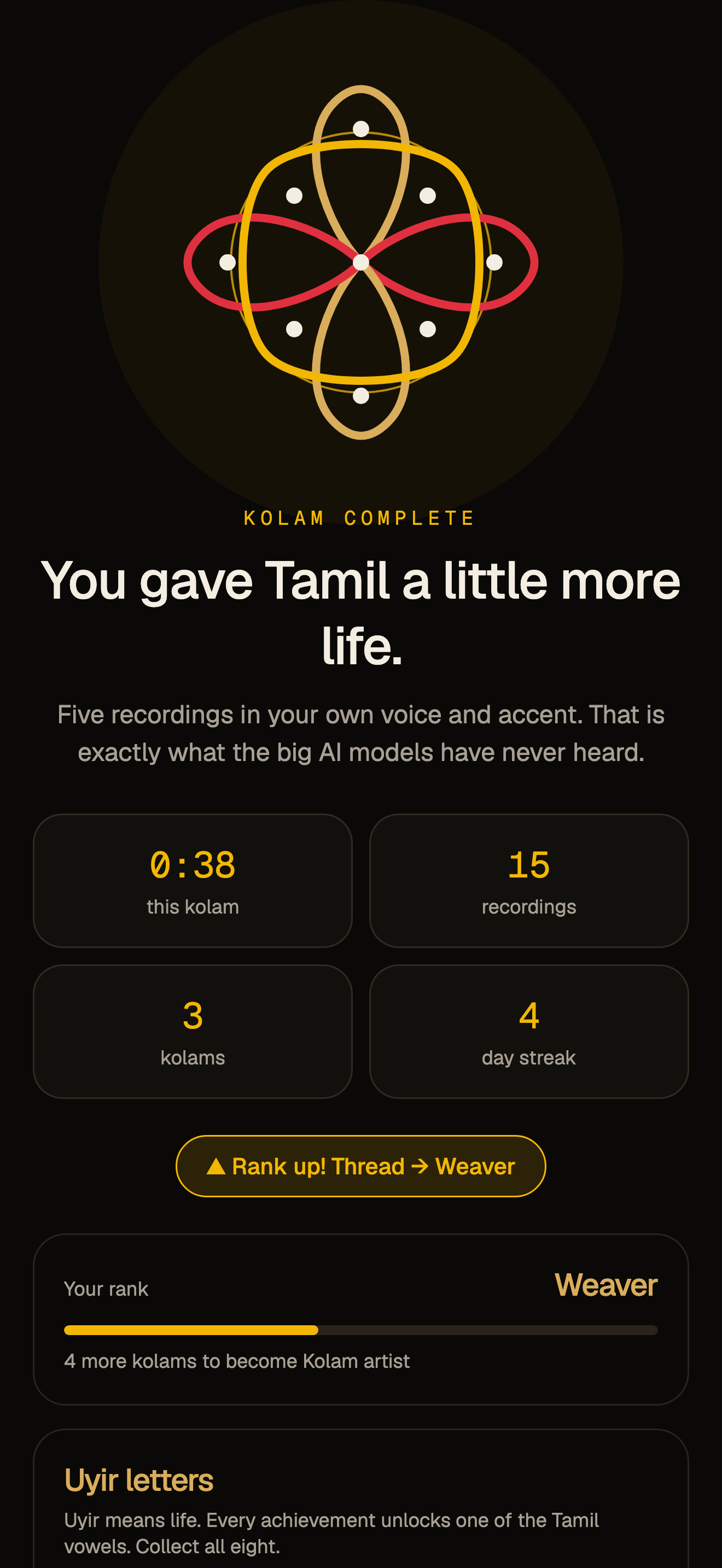
The lab started with Tamil, spoken by more than 86 million people worldwide, including a large community in the Greater Toronto Area. In the test, a speaker picks a dialect such as Jaffna, Chennai or Malaysian Tamil, says an everyday phrase, and sees what the AI heard and what it thought they meant. Nothing is stored unless the speaker chooses to share it. Tamil speakers can also record their voice in Uyir Lab's free studio, where each recording draws one loop of a kolam, the traditional Tamil floor drawing.
Uyir Lab is recruiting paid native-speaker reviewers and welcomes conversations with AI companies, researchers and community organizations working on underserved languages. Try the test at uyirlab.com/challenge and see the report card method at uyirlab.com/report.